
Advertisements
Here’s a number that still blows my mind: the average long term traveler spends between $1,500 and $2,500 per month on the road. I know because I was the idiot who blew through $4,000 in my first month of backpacking Southeast Asia back in 2018. Yeah, that happened. Planning a long term travel budget isn’t just some nice-to-do exercise — it’s literally the thing that decides whether your trip lasts six months or six weeks.
So let me walk you through what I’ve learned the hard way. Because trust me, there were a LOT of hard ways.

Figure Out Your Daily Travel Expenses First
Before you even think about booking flights, you need to sit down and figure out what you’ll actually spend each day. I’m talking accommodation, food, transportation, activities — all of it. When I first started planning, I totally forgot to budget for things like laundry and SIM cards, which sounds dumb but adds up fast.
A good rule of thumb? Use a resource like Budget Your Trip to get real average costs by country. Southeast Asia might run you $30-50 per day, while Western Europe can easily hit $80-120. Knowing these numbers ahead of time was a total game changer for me.
Don’t forget to separate your fixed costs from your variable ones. Fixed stuff includes travel insurance, phone plans, and any bills back home you’re still paying. Variable expenses are the ones that’ll sneak up on you — like that “one drink” that turns into a $60 bar tab in Lisbon.
The Emergency Fund Nobody Wants to Talk About
Okay so this is where I messed up big time. I had zero emergency fund my first long trip. Then I got a nasty stomach bug in Vietnam that required a hospital visit, and suddenly I’m scrambling to cover a $300 medical bill I hadn’t planned for.
You should keep at least 10-15% of your total travel fund set aside for emergencies. Period. Unexpected costs like medical expenses, last-minute flight changes, or replacing a stolen phone are not “if” situations — they’re “when” situations.
Also, get proper travel insurance. It was something I used to think was optional until that hospital in Hanoi taught me otherwise. Monthly premiums for long term travel insurance usually run between $50-150, which is nothing compared to an uninsured emergency abroad.
Tracking Your Spending on the Road
Here’s where most people’s travel budget planning falls apart. You make this beautiful spreadsheet before you leave, and then three weeks in you haven’t logged a single expense. Been there, done that, bought the overpriced souvenir.
I started using Trail Wallet and it honestly saved my trip. Every night before bed, I’d spend two minutes logging what I spent that day. It became kind of addicting, actually — like a game to see if I could come in under budget.
The key is finding a system that works for YOU, whether that’s an app, a notebook, or a simple spreadsheet. Consistency matters way more than the tool itself.
Cheap Travel Hacks That Actually Work
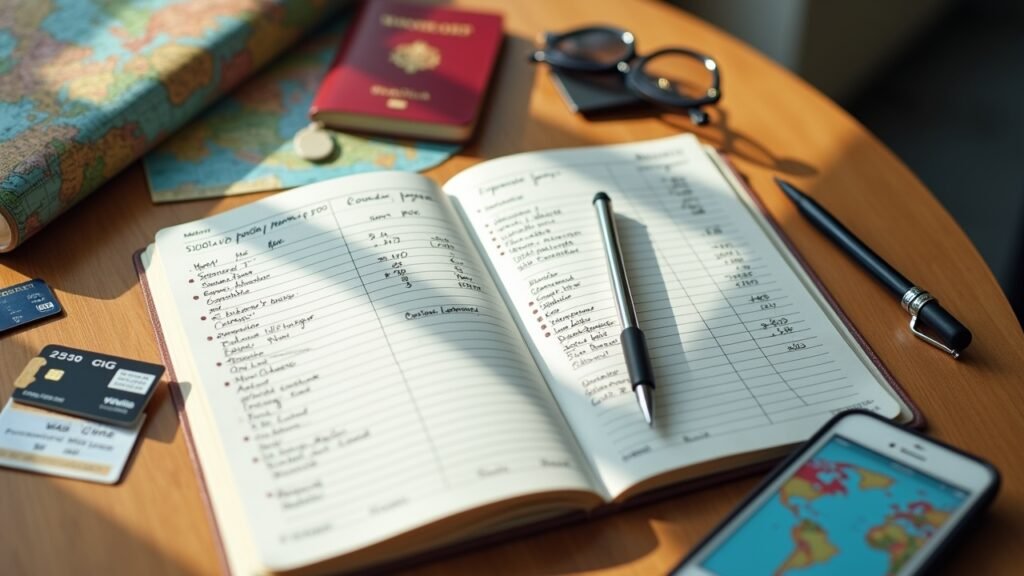
After burning through money early on, I got real creative real fast. Here are some cost-saving strategies that genuinely made a difference:
- Cook your own meals at least half the time — hostels with kitchens are your best friend
- Travel slow — moving between cities constantly is one of the biggest budget killers
- Use overnight buses or trains to save on accommodation
- Book accommodation weekly or monthly for discounts on platforms like Hostelworld
- Use local transportation instead of tourist shuttles
Advertisements
Honestly, slow travel was the single biggest money saver. When I stopped hopping cities every two days and started staying a week or more in each place, my daily costs dropped by almost 40%. Plus I actually got to, you know, experience the places I was visiting.
Your Budget Is a Living Document — Treat It Like One
Look, the most important thing I can tell you is that your long term travel budget will change. And that’s completely fine! The numbers you set before leaving home are educated guesses at best. What matters is that you check in regularly, adjust when needed, and don’t beat yourself up when one country costs more than you planned.
Customize everything I’ve shared to fit your travel style and comfort level. Some people are happy sleeping in dorms; others need a private room to stay sane. Neither is wrong — just budget accordingly.
If you found this helpful, come explore more practical travel planning tips over at Wander Tactics. We’ve got tons of guides designed to help you travel smarter, longer, and without that 3 AM panic about your bank account. Trust me, your future traveling self will thank you!